Bethany Community Church AVL Upgrade
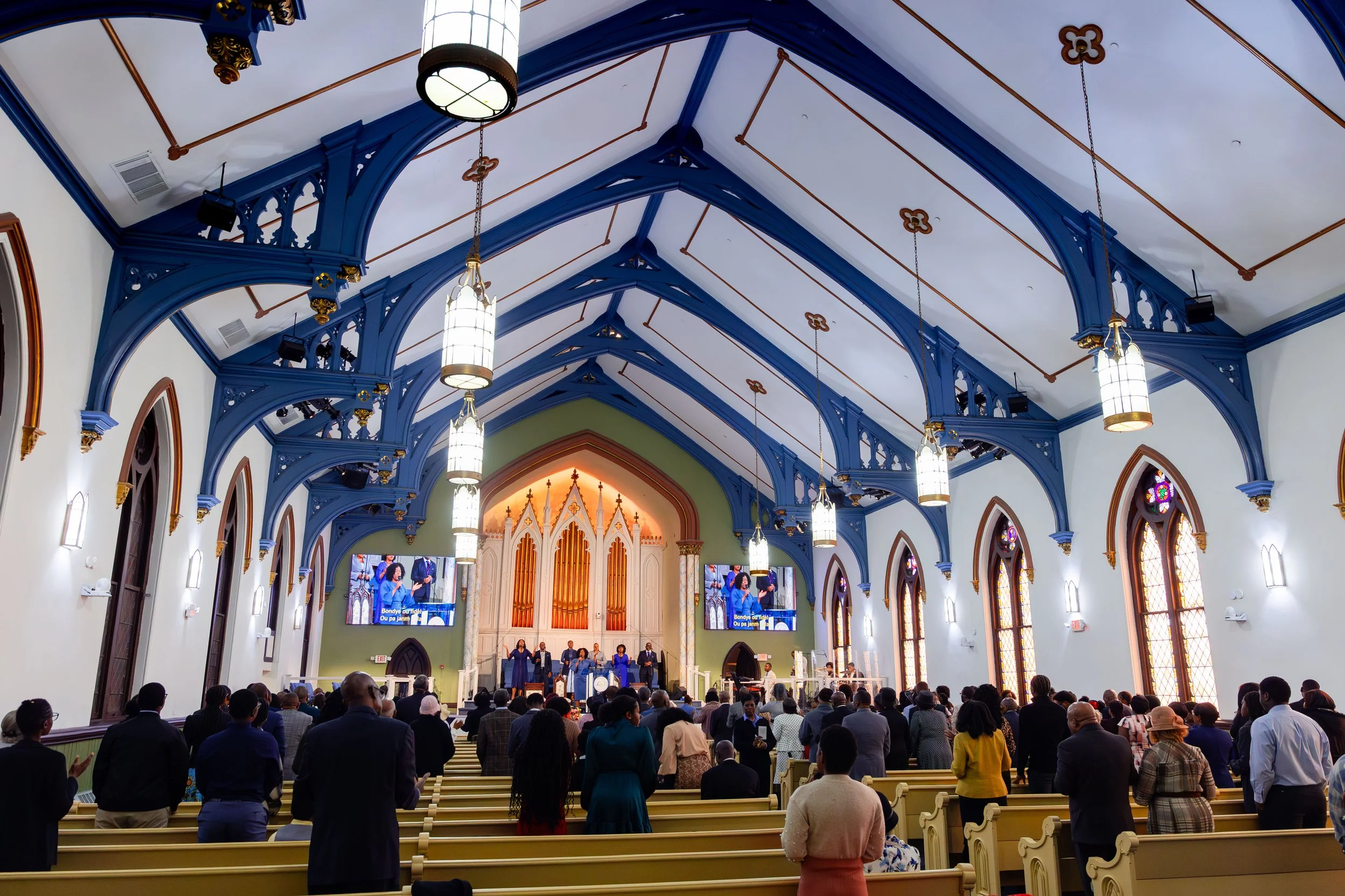
Bethany Community Church, originally constructed in the 19th century, faced ongoing limitations in both infrastructure and technical capability. Church leadership identified the need to modernize their audio, video, and lighting systems to better support services and community engagement.
The church contacted Panavid to help them see this vision through. The objective was to design and implement cost-effective, future-ready systems that would improve clarity, visibility, and overall engagement, without exceeding budget constraints or compromising the integrity of the historical structure.
THE CHALLENGE
At a foundational level, the existing systems were outdated and no longer capable of supporting the church’s needs. Audio coverage was inconsistent, relying on underperforming line arrays and temporary speaker placements that resulted in uneven sound throughout the room.
The video system faced similar limitations. Projectors positioned across the sanctuary, struggled to compete with ambient light from stained glass windows, resulting in washed-out imagery and poor readability. Critical visual elements were often lost, reducing engagement for both attendees and participants.
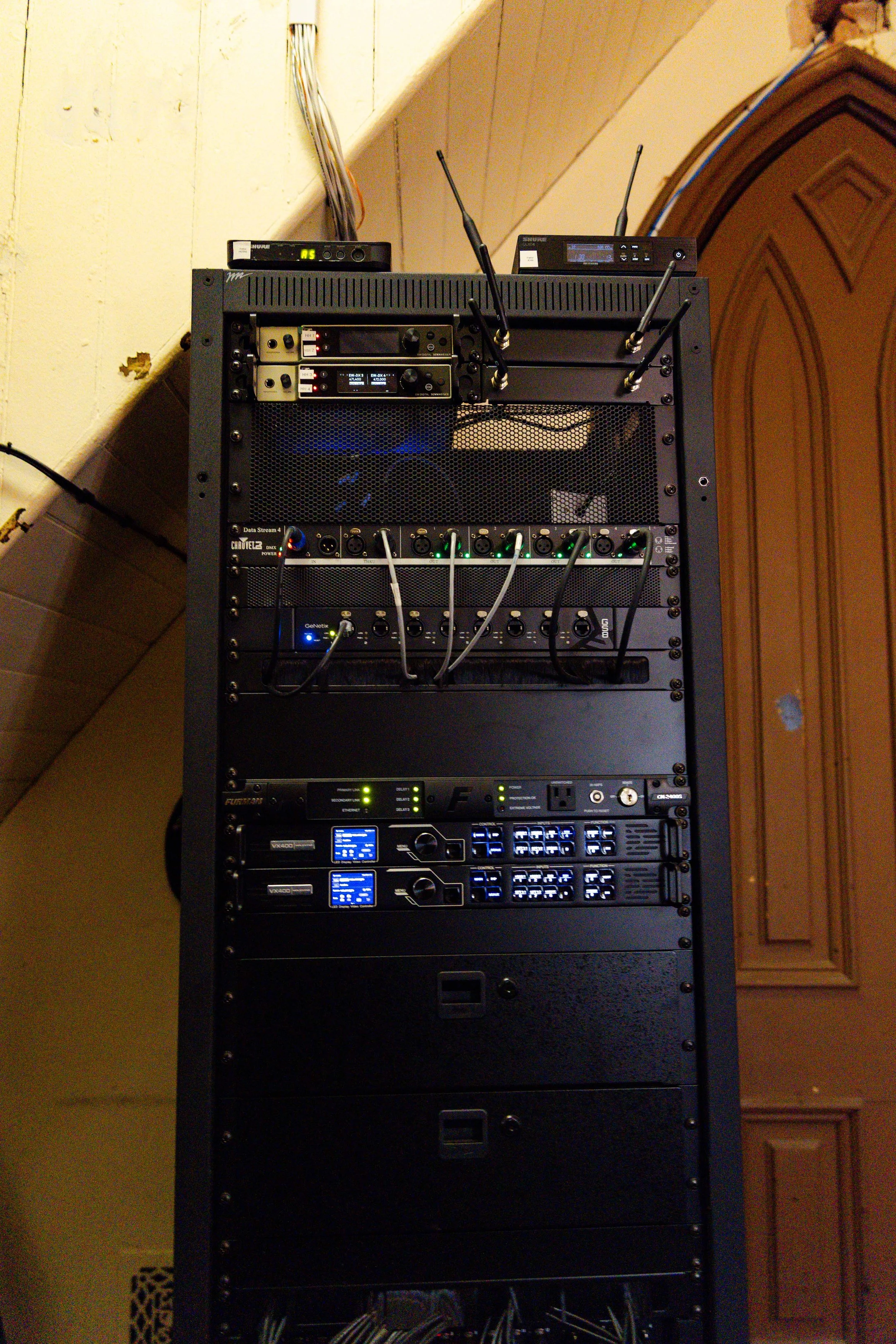
Underlying infrastructure issues further constrained performance. Years of incremental updates had led to disorganized and aging cabling, increasing the risk of failure and making troubleshooting time-consuming. The lack of a structured system design limited reliability and scalability.
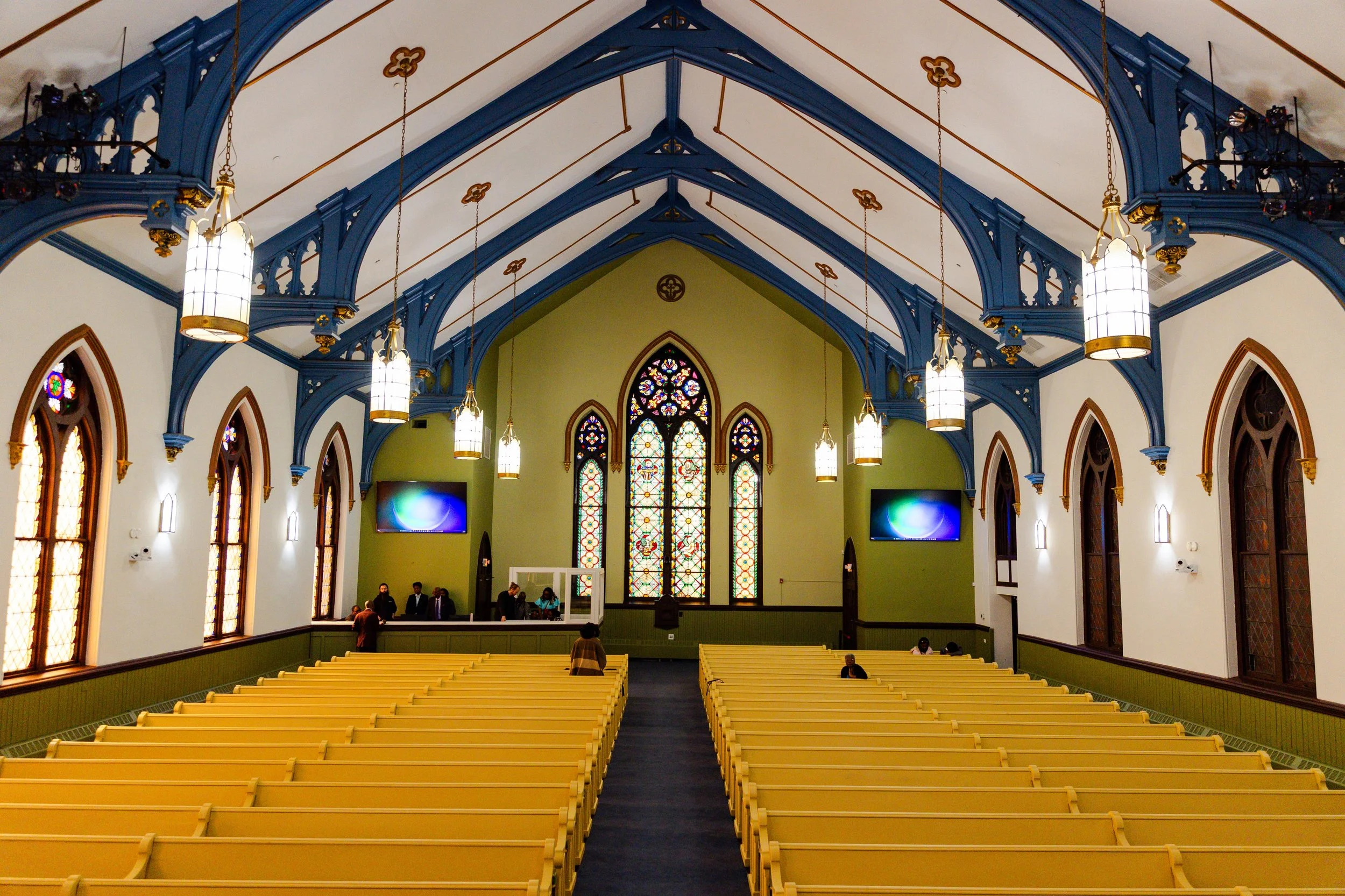
The building itself introduced additional complexity. Structural elements, including century-old trusses and dense stone-and-plaster walls, restricted cable pathways and required engineered mounting solutions. Any intervention needed to be carefully executed to preserve the integrity of the structure.
The project required a careful balance between modernization and preservation. The church’s historic character could not be compromised, yet the technology needed to function at a contemporary standard. Leadership had a clear vision for improvement but required professional guidance to translate that vision into practical, buildable solutions.
THE SOLUTION
Our approach focused on delivering a system that was technically sound, operationally efficient, and aligned with both budget and architectural constraints.
Audio
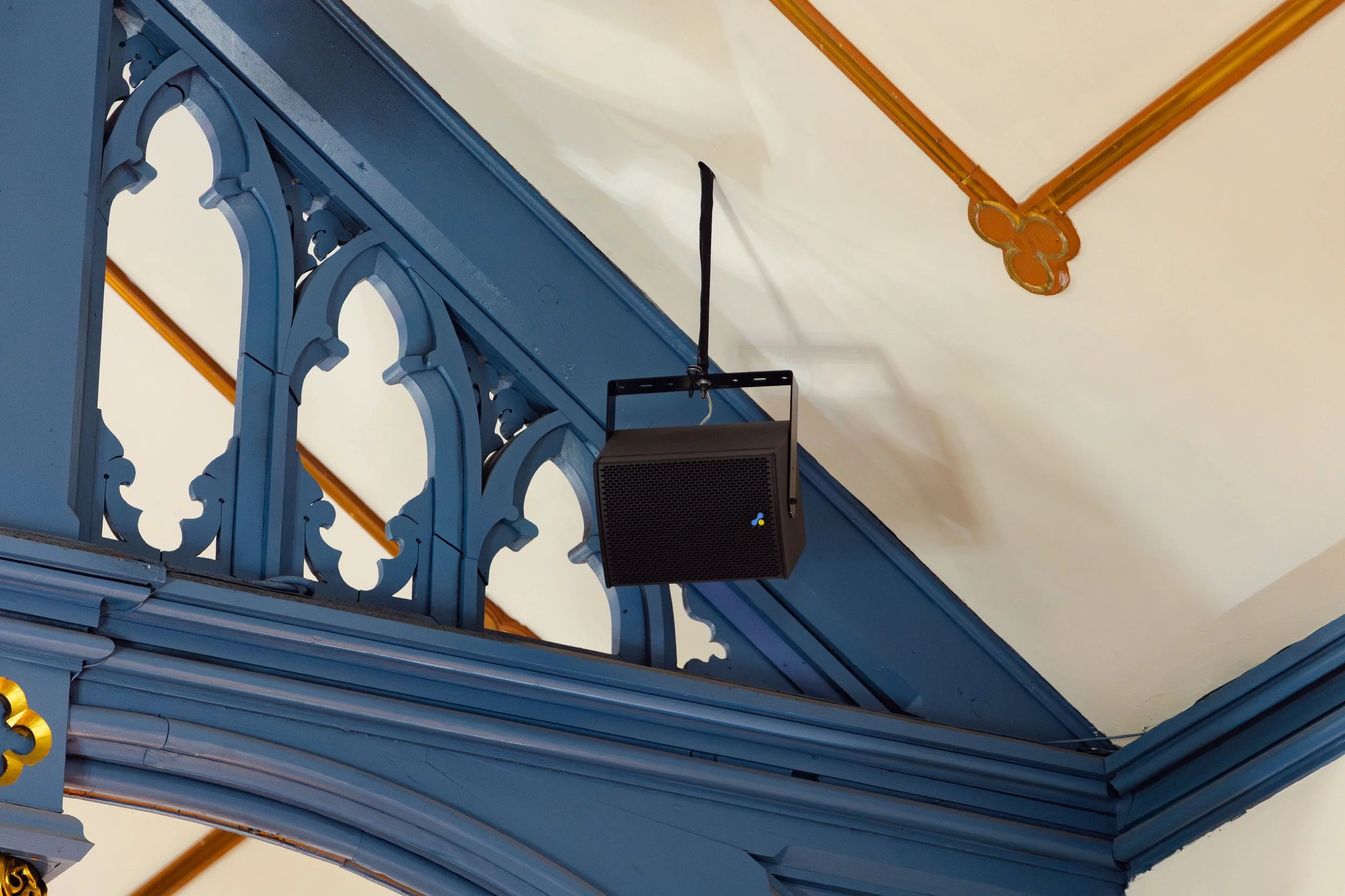
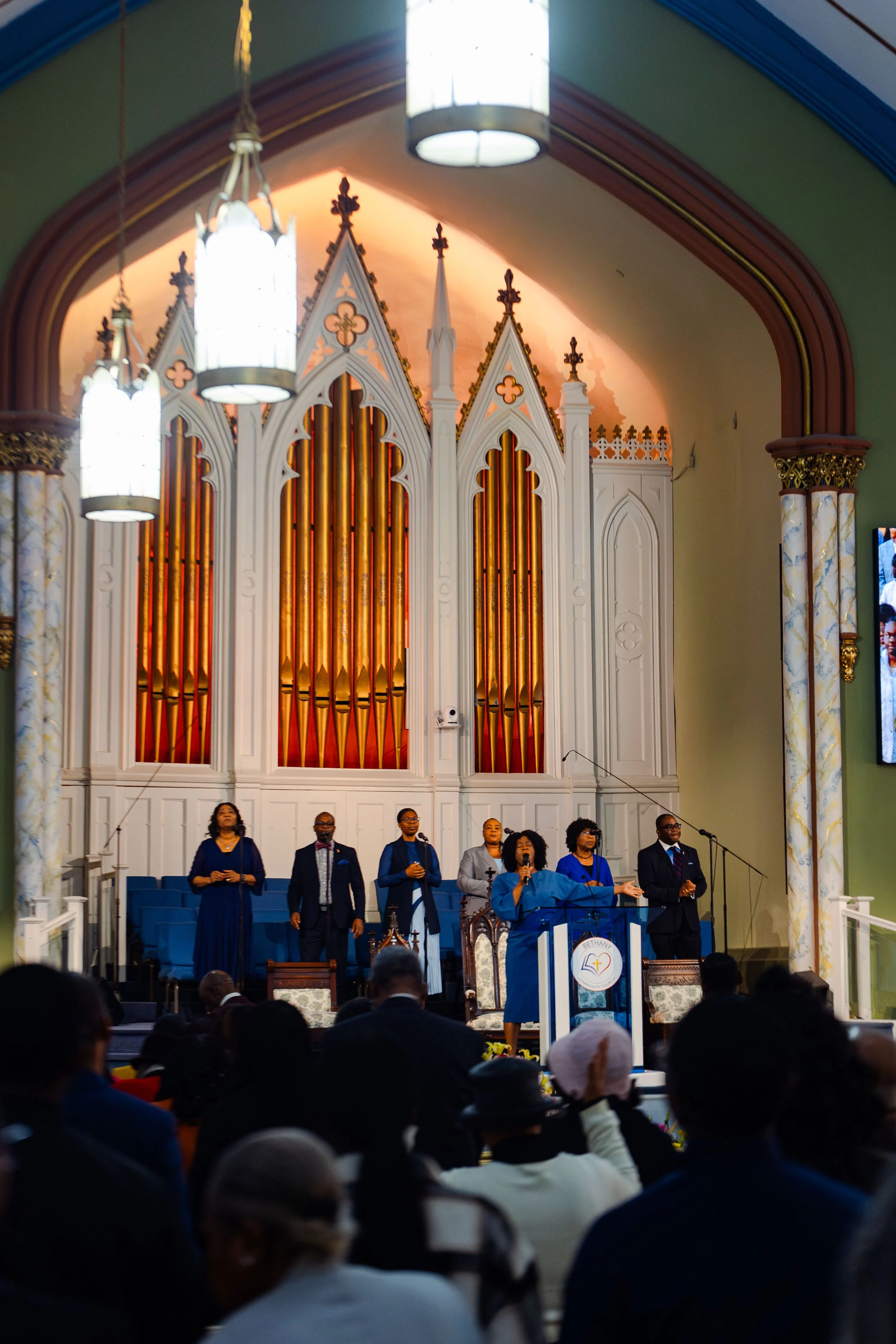
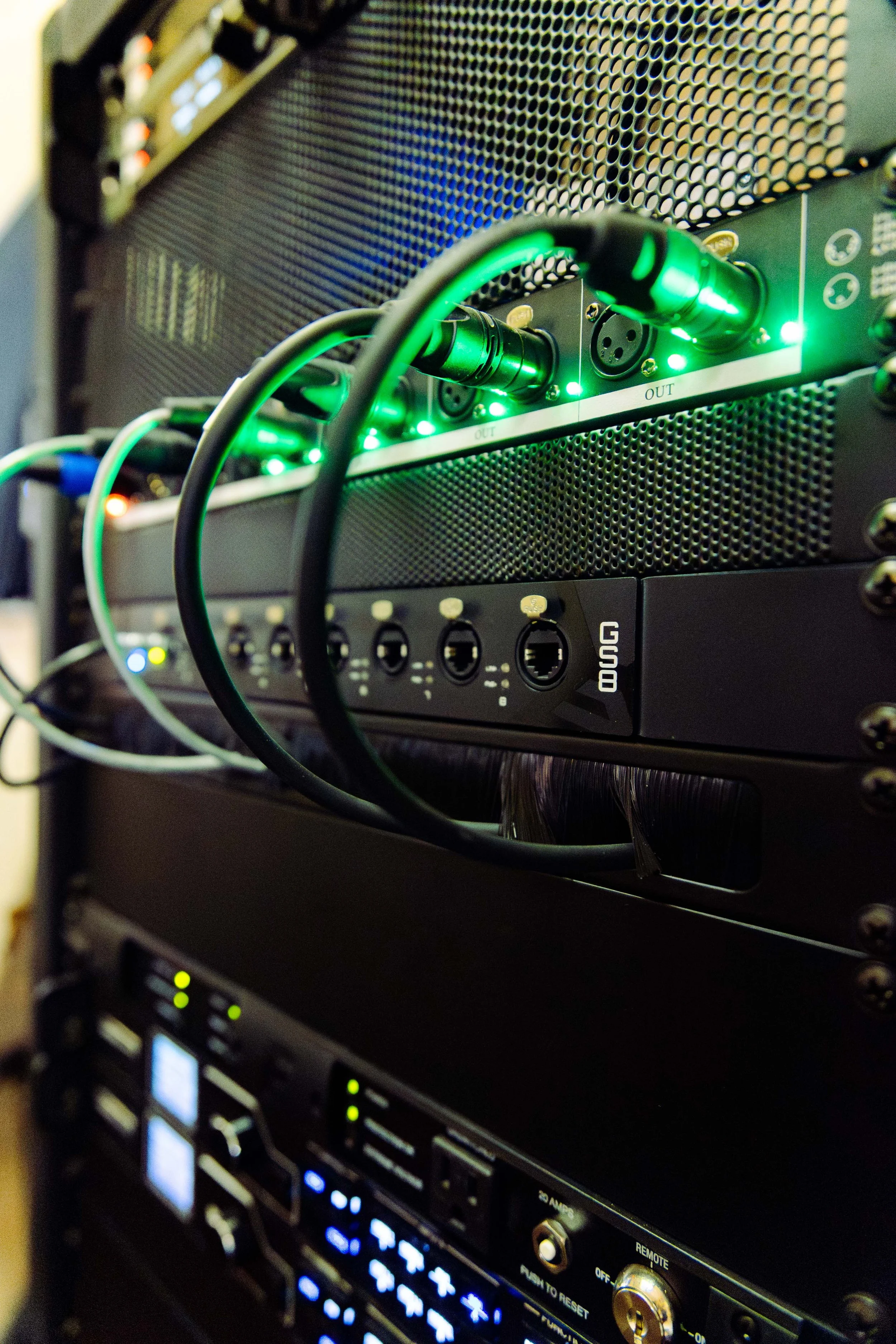
A new system built around Fulcrum Acoustic RX & CCX Series loudspeakers, powered by DriveFlex Series amplification, delivered precise, controlled coverage tailored to the room’s acoustics. This combination improved intelligibility and ensured consistent sound distribution throughout the sanctuary, eliminating the variability of the previous system.
An Allen & Heath SQ-7 console, supported by a GX4816 stagebox, provided expanded input capacity, streamlined signal routing, and a more intuitive mixing environment, enabling both flexibility for advanced users and accessibility for volunteers.
Video
Projection was replaced with two 2.6mm pixel pitch i5LED displays, eliminating the limitations introduced by ambient light. The finer pixel pitch provides improved image clarity at typical viewing distances, ensuring text and graphics remain sharp and legible throughout the space. This shift delivered consistent brightness, color accuracy, and contrast, regardless of natural lighting conditions.
The displays were mounted by routing through thick stone walls, requiring carefully engineered mounting and cable pathways to ensure both structural integrity and long-term reliability.
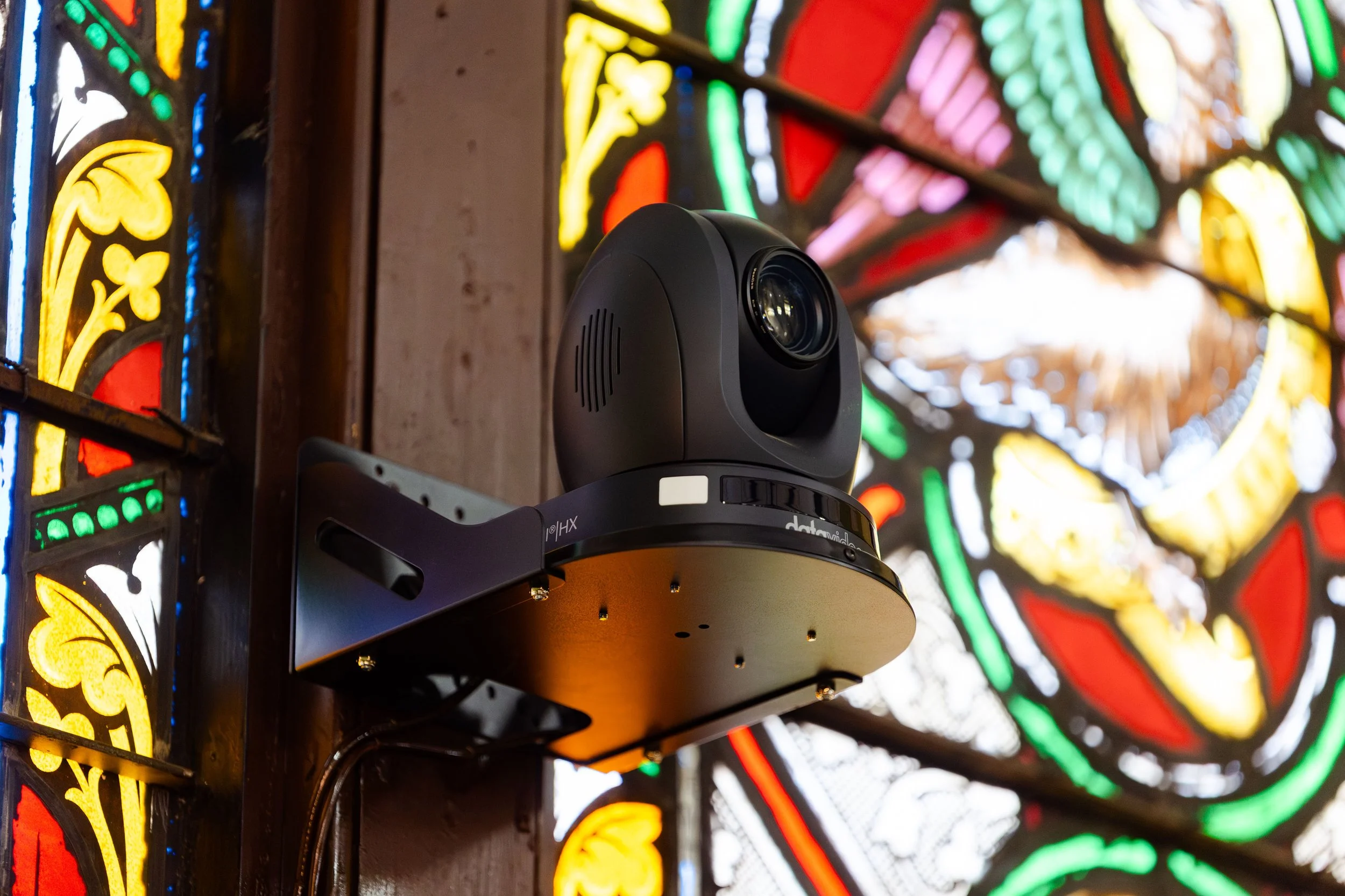
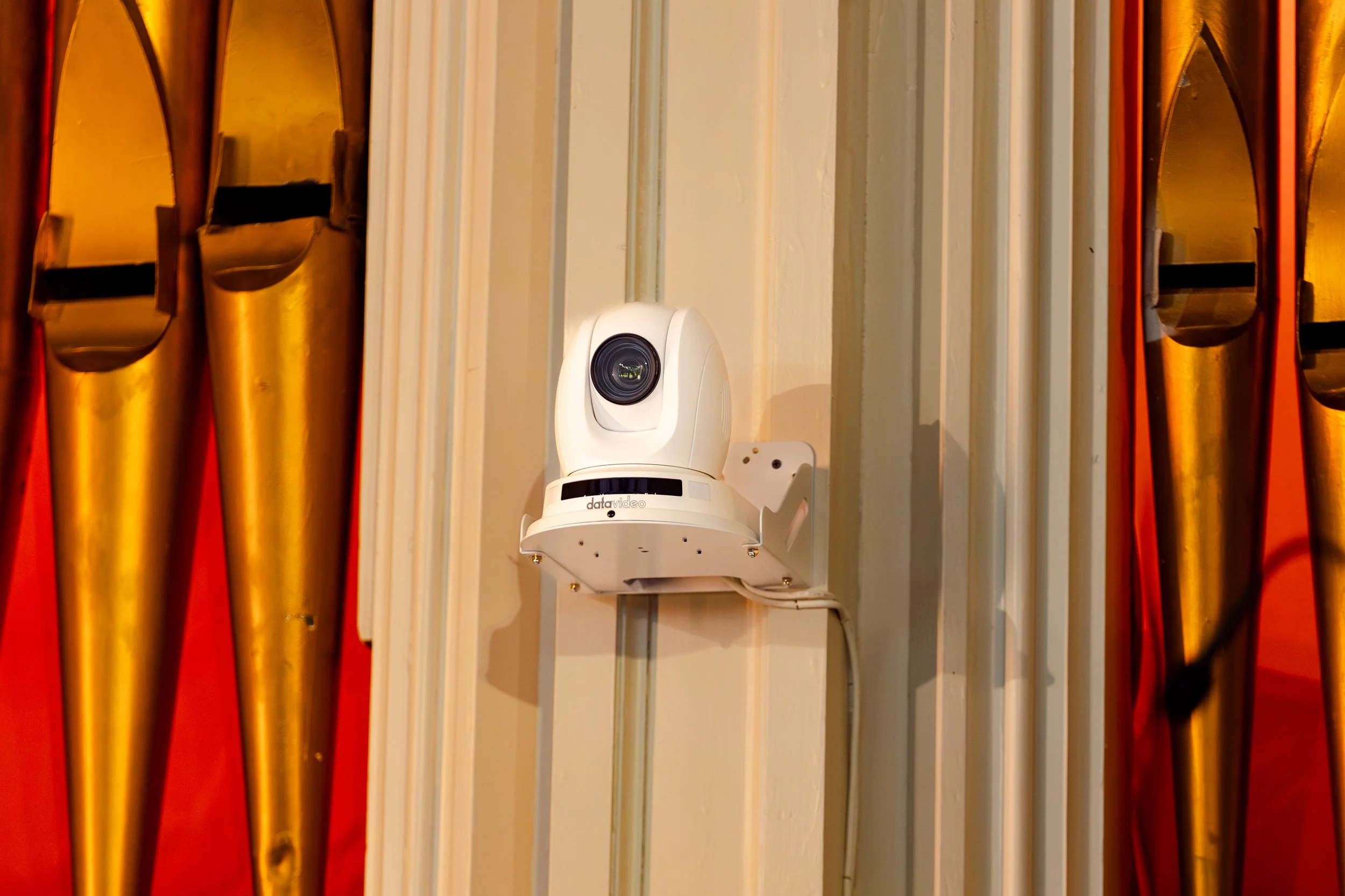
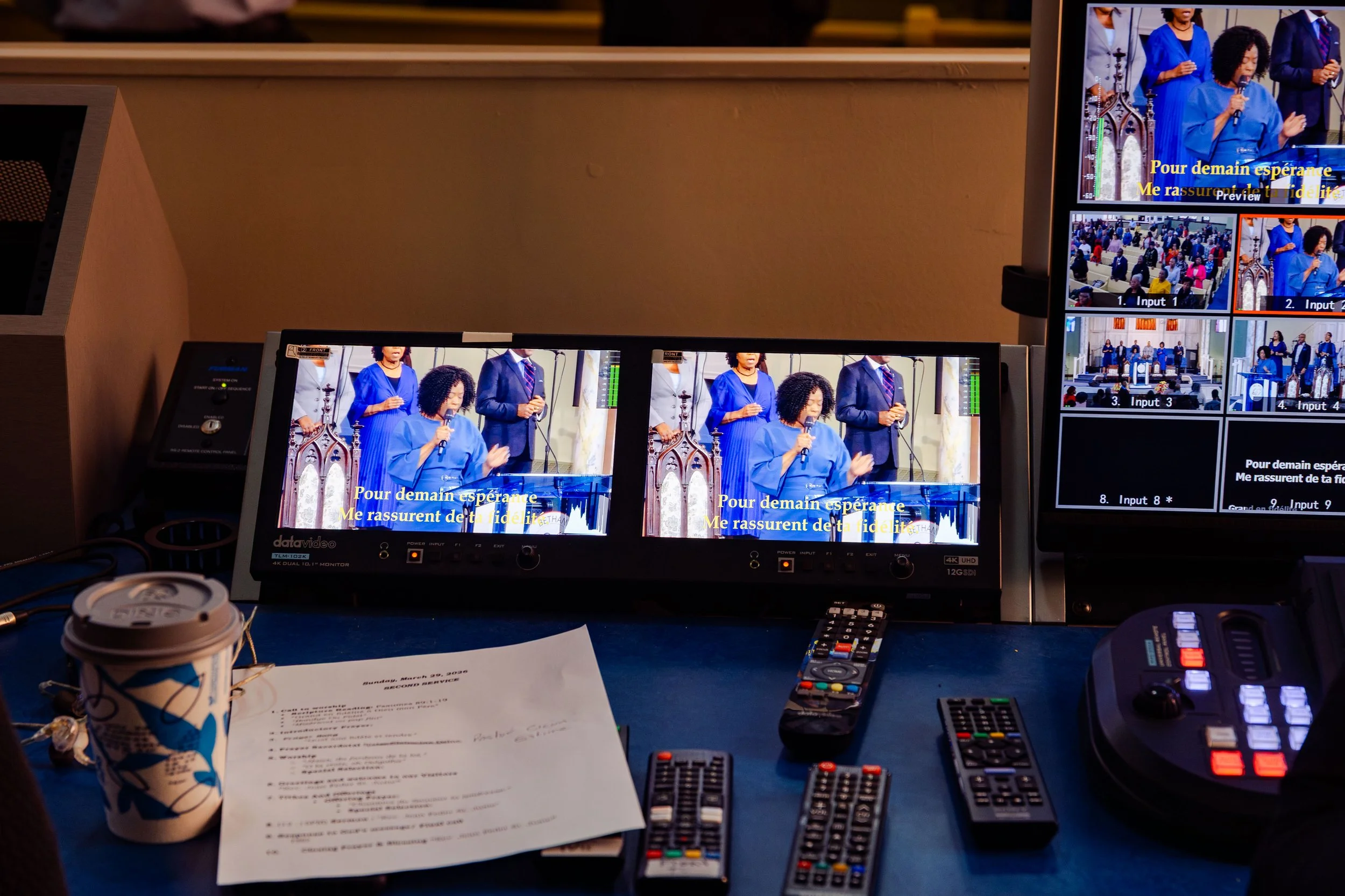
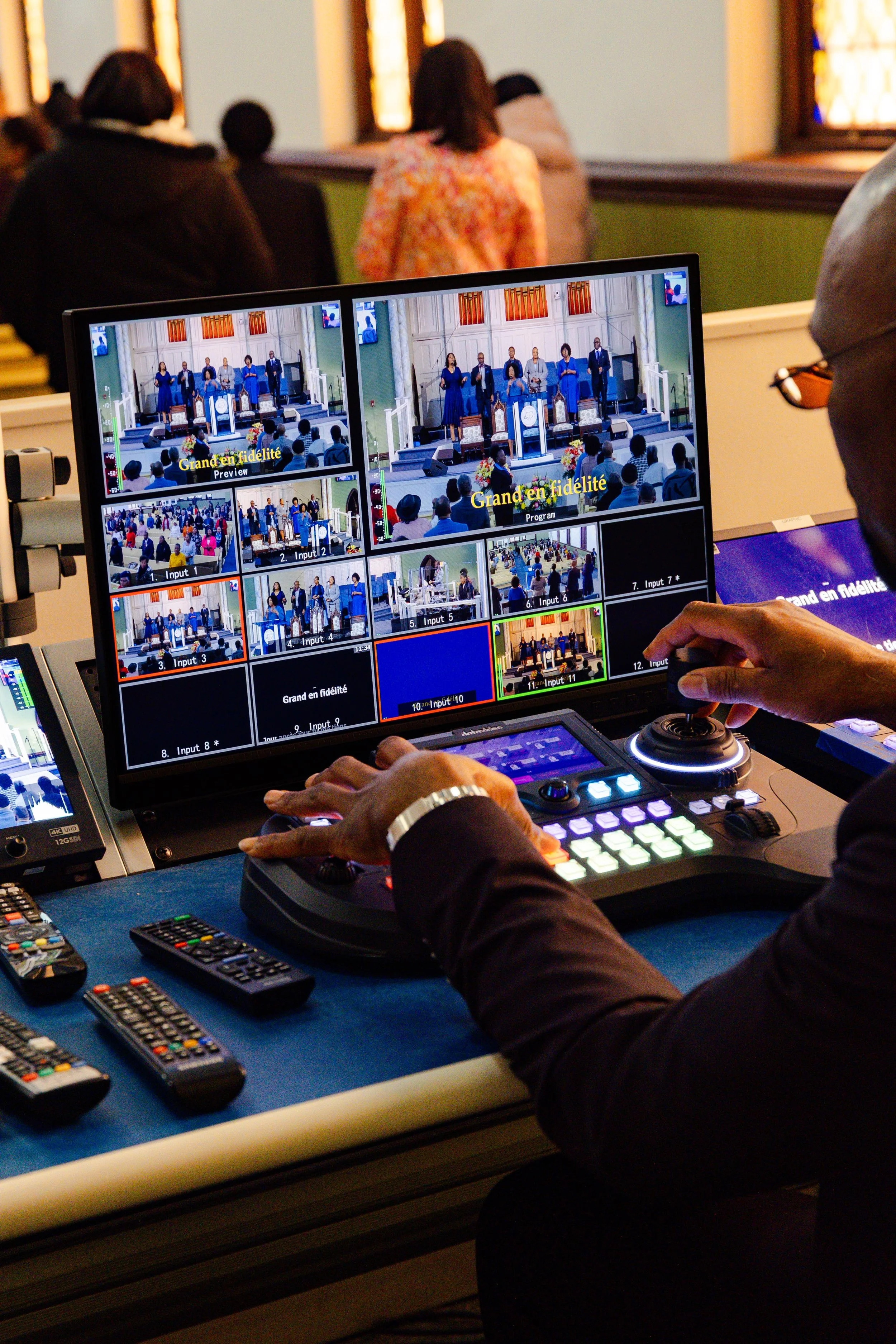
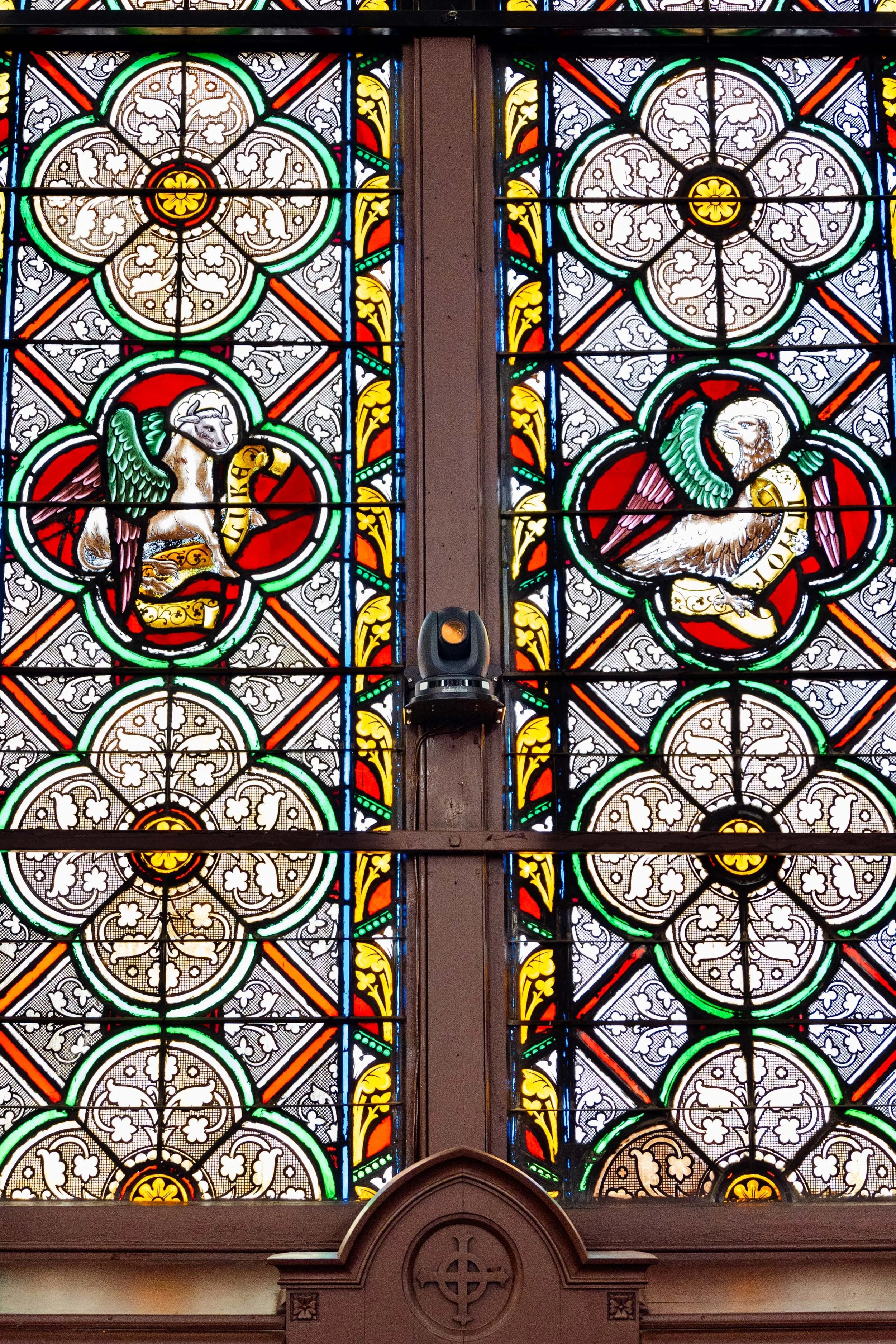
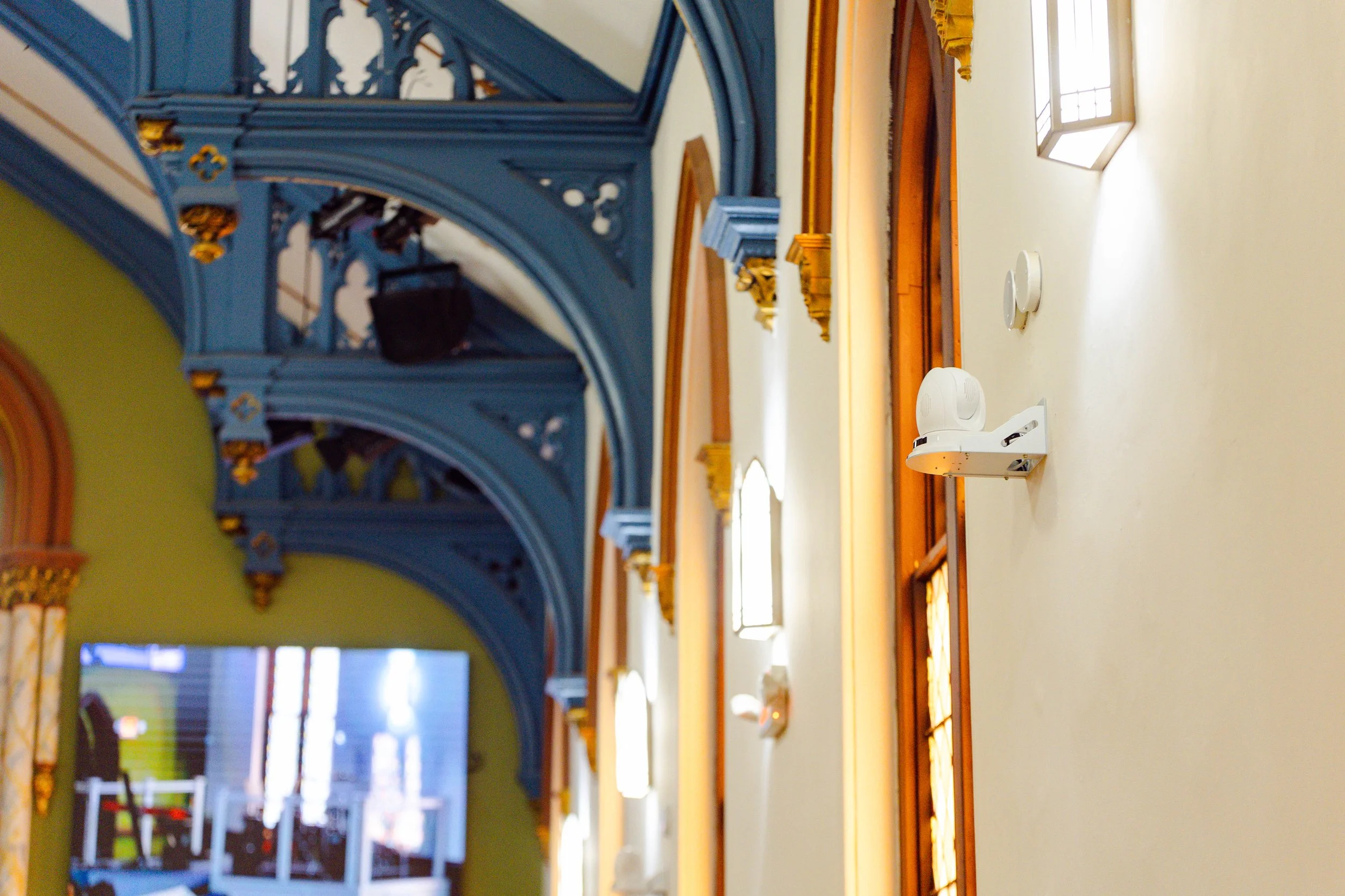
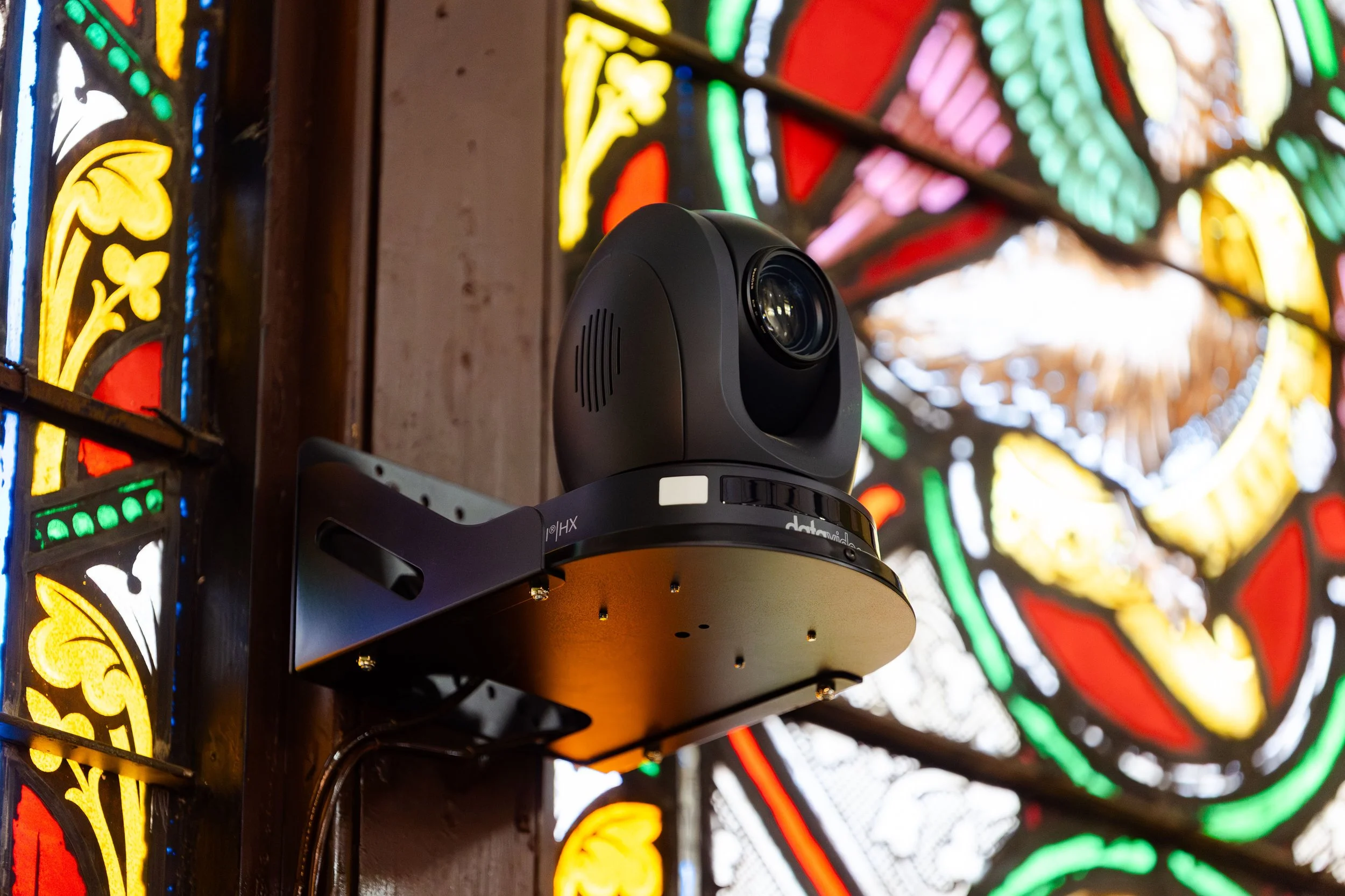
A six-camera system using Datavideo PTC-140 PTZ cameras was deployed to support both in-room production and live streaming. Cameras were strategically positioned from front to back to provide comprehensive coverage without disrupting the visual environment. Control is centralized through a Datavideo RMC-300A & SE-3200, enabling precise camera movement, preset recall, and efficient operation with minimal personnel.
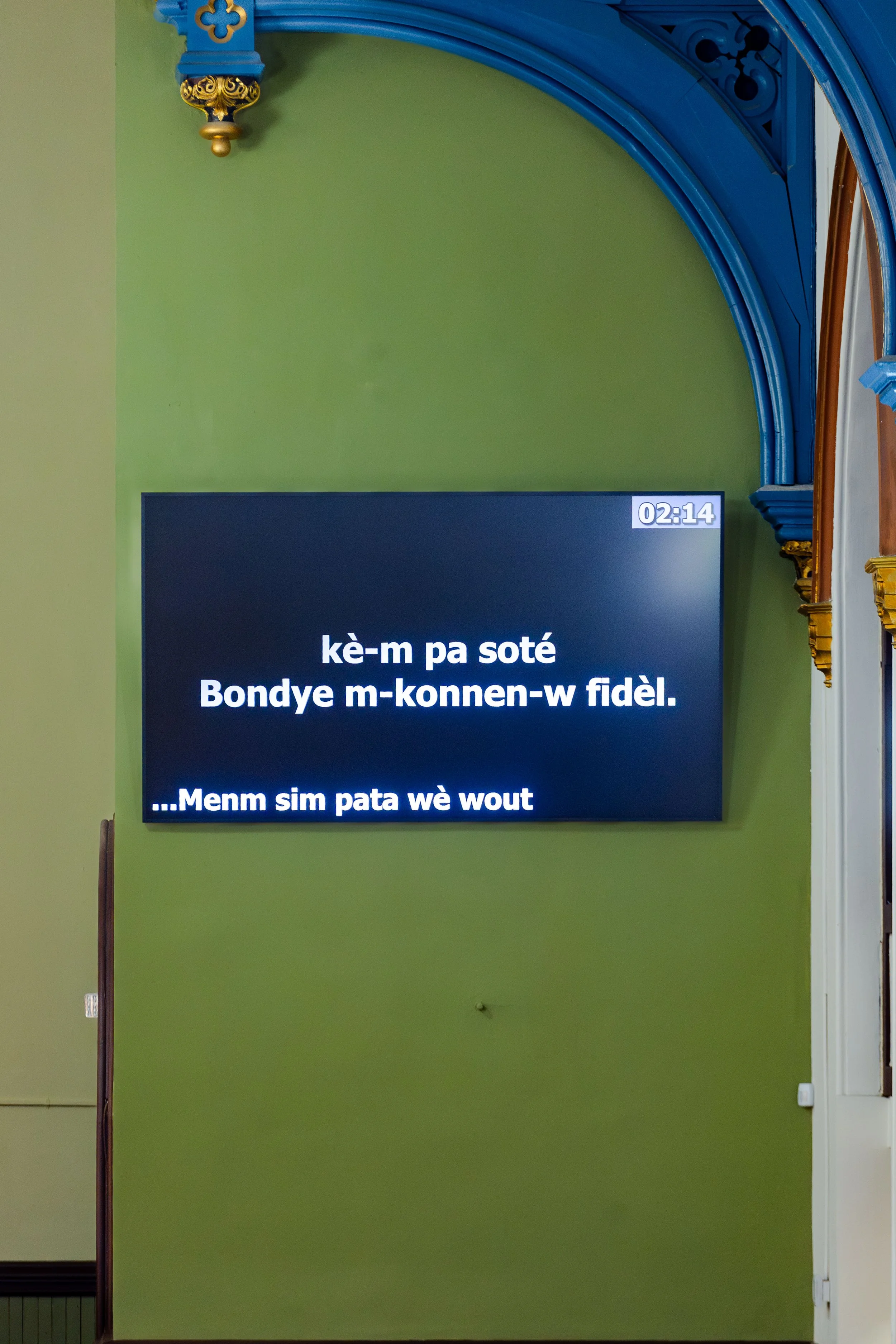
Additionally, 98-inch confidence monitors were installed on both sides of the sanctuary, positioned out of audience sightlines while maintaining clear visibility from the stage.
Lighting
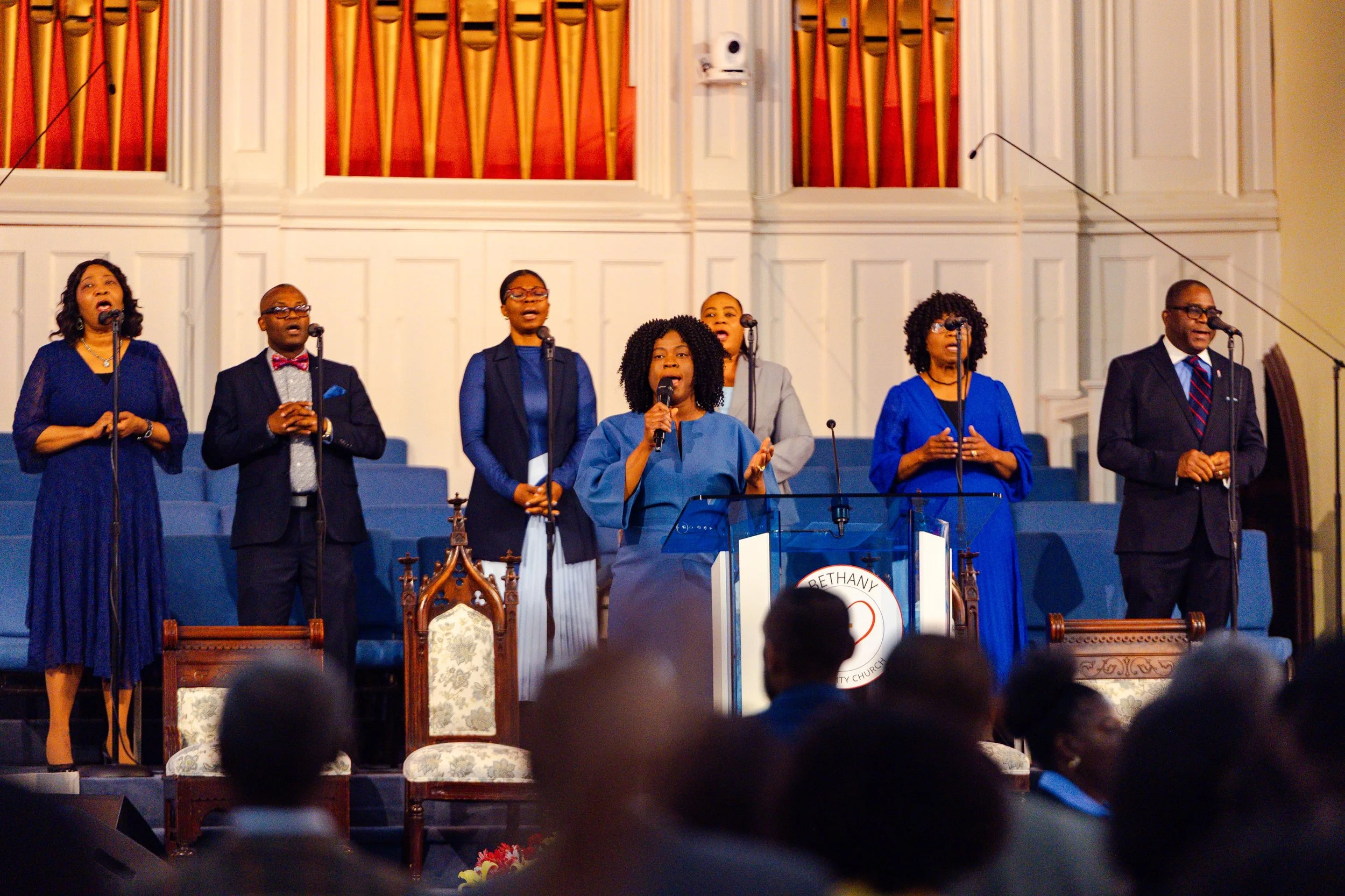
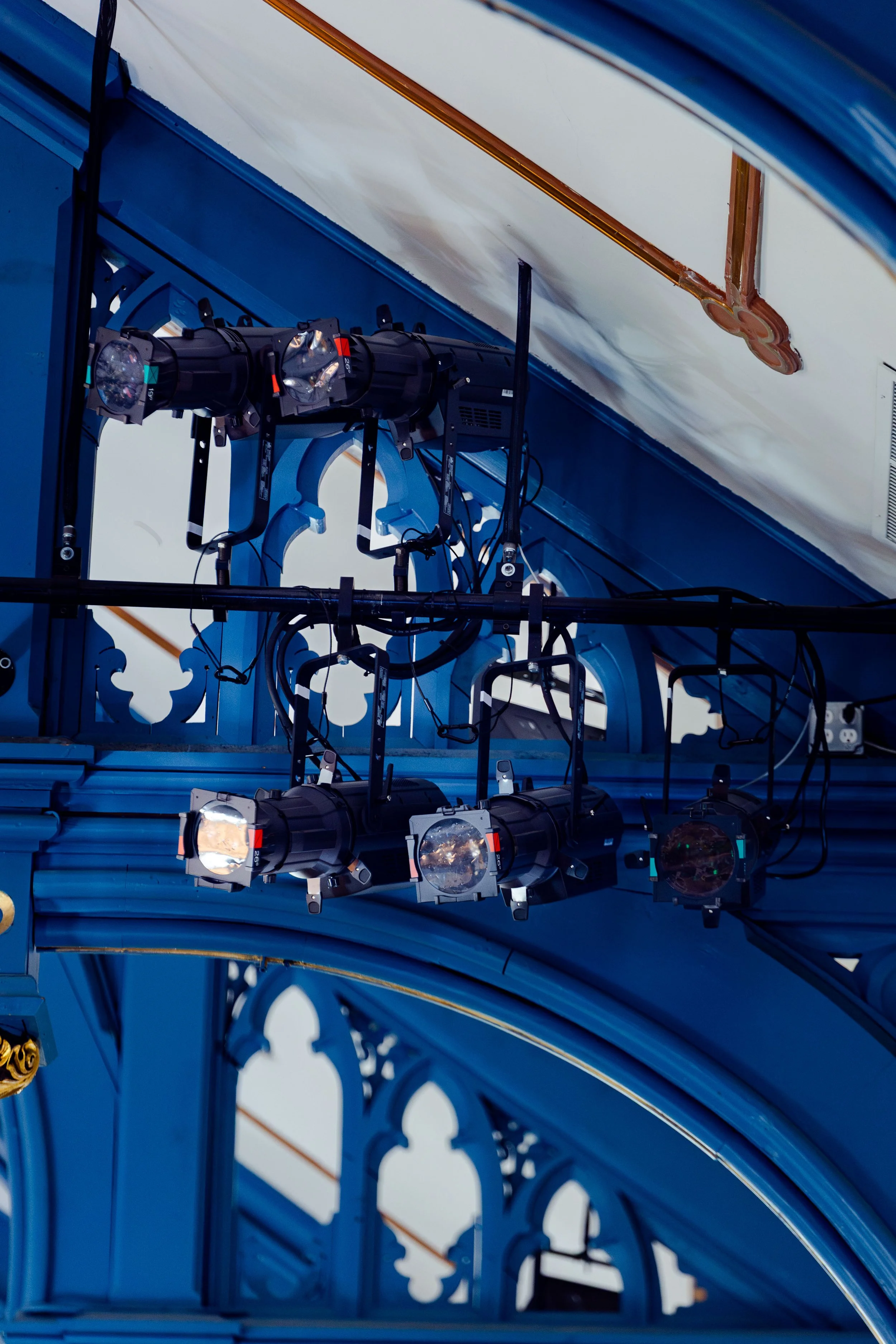
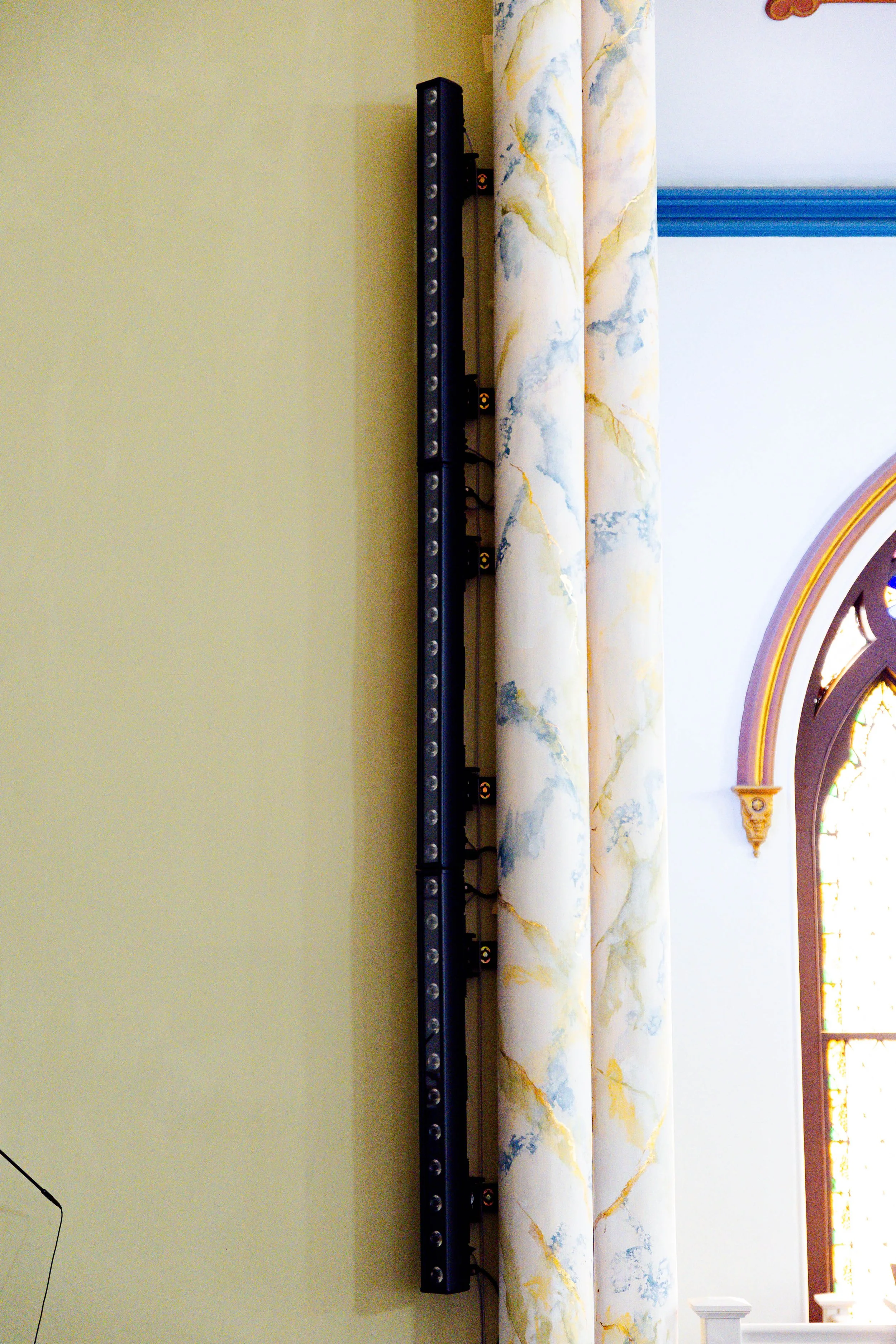
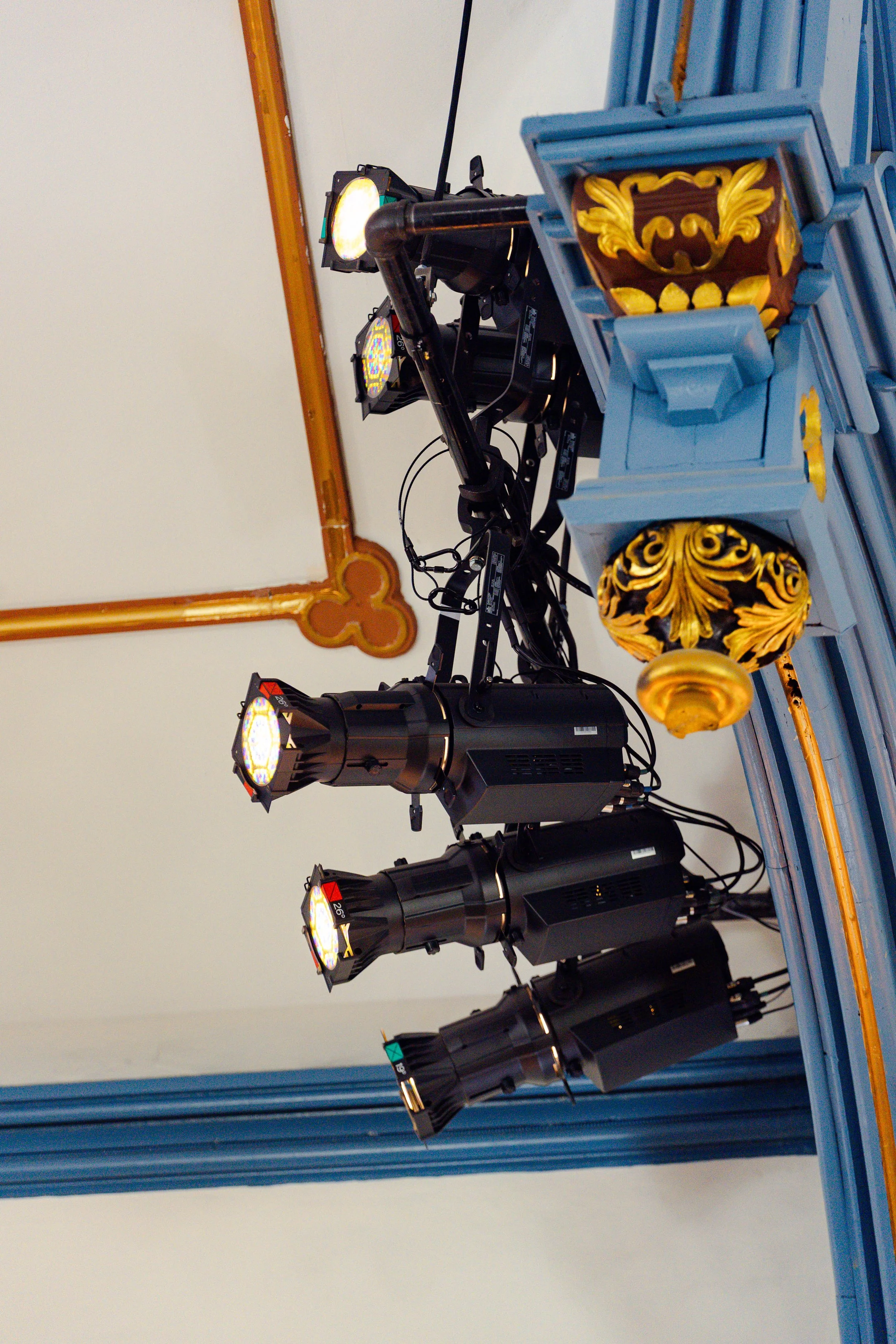
The lighting system was redesigned using Chauvet Professional fixtures to improve stage visibility and enhance architectural elements. The system includes (14x) Ovation E-910FC fixtures for front and key lighting, (6x) Ovation F-915FC fixtures to deliver consistent, high-output washes, and (9x) COLORdash Batten H12X IP units integrated along the stage and behind the organ pipes.
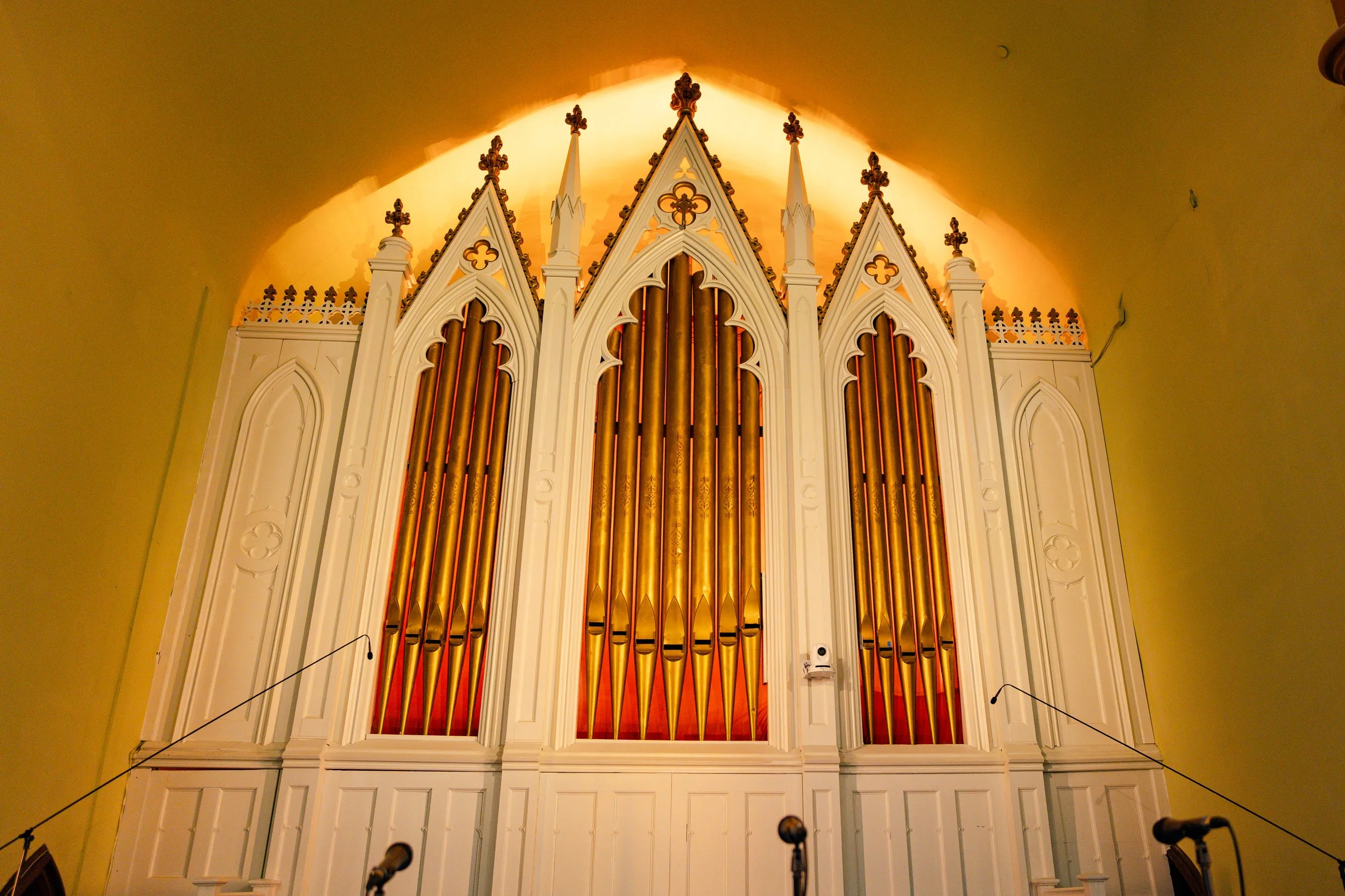
This combination provides accurate color rendering, even coverage, and the flexibility to adapt the visual environment as needed. The placement of the batten fixtures allows the organ pipes and surrounding architecture to be highlighted in a controlled, intentional way, adding visual depth without introducing distraction.
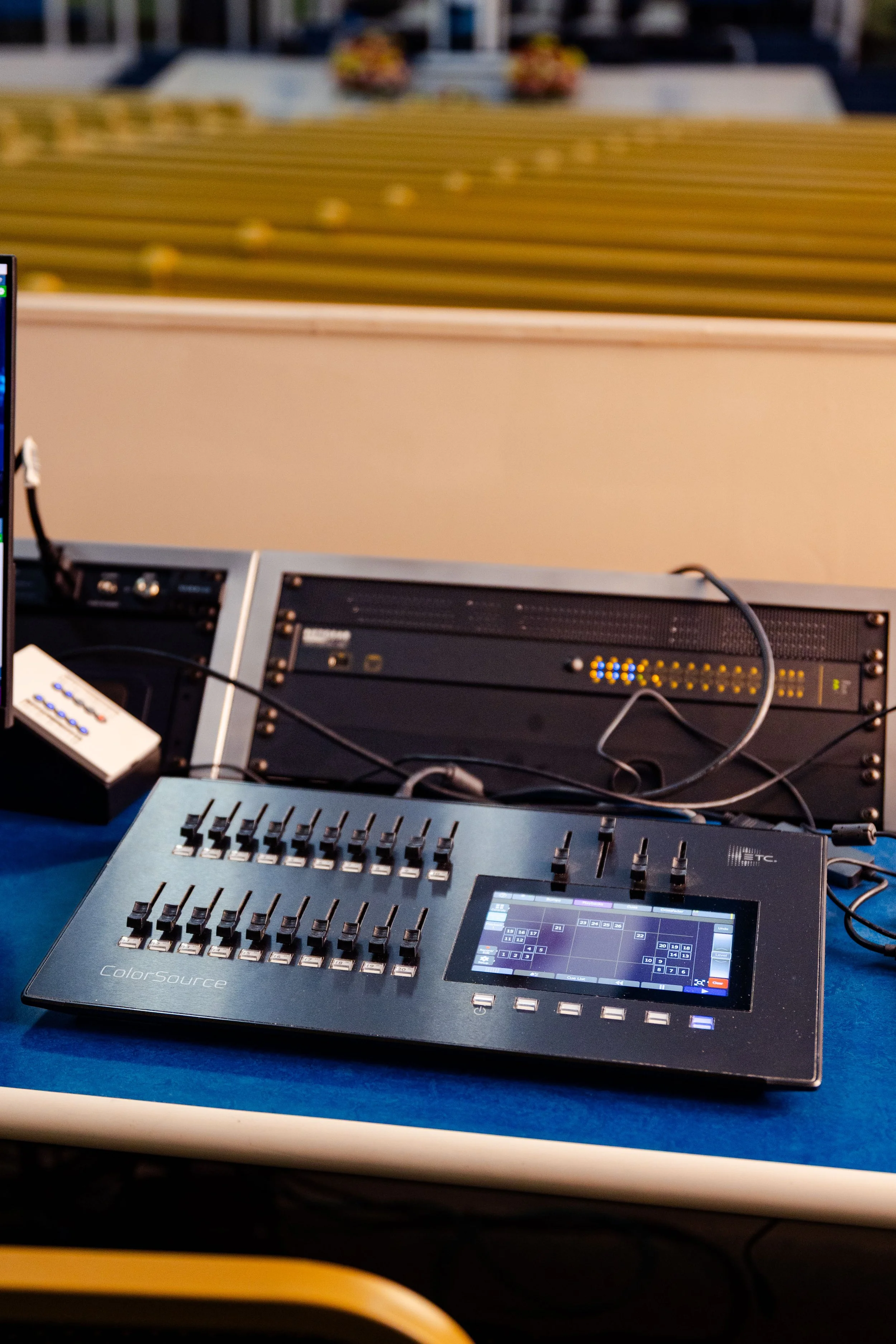
Control is managed through an ETC ColorSource 20 console, providing a streamlined interface for programming and recall of lighting scenes, enabling consistent operation across services with minimal complexity.
“We want to commend PANAVID for their outstanding professionalism during the installation of our new audio-video system at the church. From the initial walkthrough to final testing, they communicated clearly, arrived on time, maintained a clean and respectful work area, and worked diligently to minimize disruption to our services and ministries. They also took time to walk our team through the system. We’re grateful for their courteous, organized approach and the quality of their work, and we would gladly recommend them to other churches and organizations.”
THE RESULT
The completed system transformed the church into a modern, fully functional worship environment while preserving its historic character.
Audio clarity and coverage improved significantly, delivering consistent sound throughout the space. The transition to high-resolution LED displays resolved long-standing visibility issues, creating a more engaging and accessible visual experience regardless of ambient light conditions.
The addition of a multi-camera system expanded production capabilities, enabling high-quality live streaming and content capture. This positions the church to reach a broader audience beyond the physical space.
Operationally, the system is more reliable, easier to use, and better organized. Church staff received training on all systems, ensuring smooth and consistent execution of services moving forward.
The removal of outdated infrastructure and introduction of structured cabling and equipment layouts improved both performance and long-term sustainability.
Overall, the project delivered a balanced solution—technically robust, cost-effective, and aligned with both current needs and future growth—enhancing the experience for in-person attendees and remote viewers.